Blog
Cloud Outages Are Inevitable. Business Disruption Doesn’t Have to Be.
Recent cloud provider outages highlight cloud concentration risk. Learn how enterprises can engineer resilience by design to avoid business disruption.
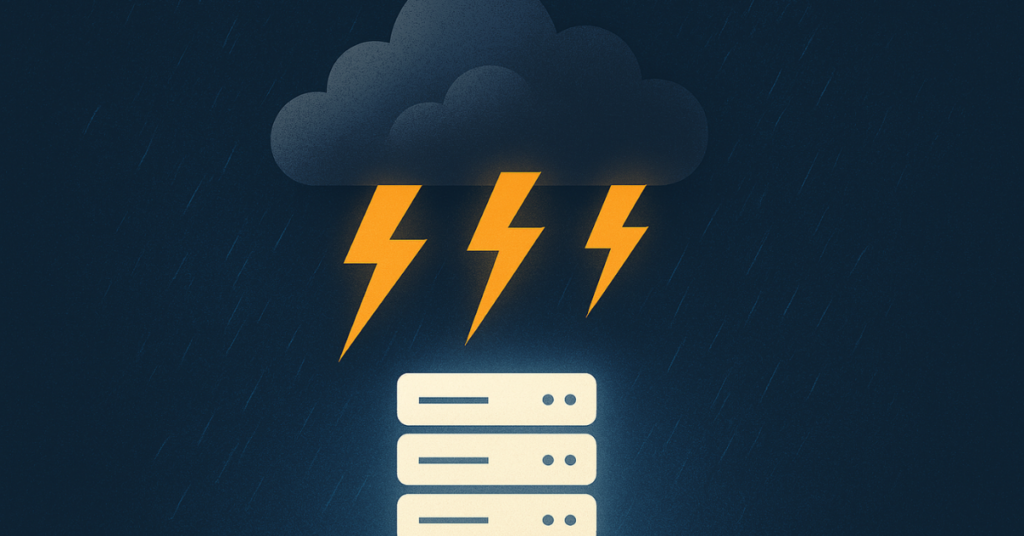
In the span of just two weeks, two hyperscalers experienced major outages that rippled across industries, continents, and customer experiences. These incidents weren’t just technical hiccups – they were stark reminders of a growing structural risk: cloud concentration.
What Happened?
- Outage #1 (Oct 19-20, 2025):
A DNS automation bug in a major U.S. cloud region cascaded into widespread service failures. Popular platforms in social media, digital payments, and streaming were affected. The outage lasted approximately 15 hours. - Outage #2 (Oct 29-30, 2025):
A misconfiguration in a global content delivery service disrupted operations across enterprise productivity tools, gaming networks, and airline check-in systems. Recovery took over 8 hours.
These weren’t isolated events. They exposed how fragile the digital backbone has become – and how dependent enterprises are on a small number of hyperscale providers.
The Cloud Concentration Risk
Cloud has become the default infrastructure for digital business. But with that convenience comes a hidden cost: a single provider’s failure can become your failure.
- Control-plane fragility: DNS, identity, and routing errors can take down entire ecosystems.
- Dependency chains: SaaS, payments, CDNs, and customer apps often share the same cloud region or backbone.
- Geopolitical and physical risks: Cable cuts or regional routing changes can cause outages even without a cyber event.
The result? Transaction failures, SLA penalties, reputational damage, and regulatory exposure – especially when continuity controls are lacking.
Resilience by Design: A New Imperative
At Arcova, we believe the answer isn’t to abandon cloud – it’s to engineer for failure. That means building resilience into every layer of your cloud strategy.
Here’s how:
- Governance & Assurance
- Enforce change control for DNS, CDN, and identity configurations.
- Use synthetic monitoring and SLOs to detect issues early.
- Align third-party SLAs with your business impact tiers.
- Secure by Default Cloud Posture
- Harden identity and access controls.
- Implement policy-as-code guardrails and drift detection.
- Protect the network edge with segmentation and DDoS defenses.
- Resilient Architecture
- Avoid single-region dependencies; design for failover.
- Replicate data across regions with immutable backups.
- Map service dependencies and ensure path diversity.
- Business Continuity & Recovery
- Integrate cyber, IT, and continuity teams under one response framework.
- Regularly test outage scenarios (DNS, identity, storage).
- Pre-stage crisis communications and regulatory notifications.
The Business Case for Resilience
Resilience isn’t just a technical challenge – it’s a strategic differentiator. Enterprises that can absorb cloud disruptions without skipping a beat will earn trust, protect revenue, and meet rising regulatory expectations.
The next outage is not a matter of if, but when. The question is: Will your business be ready?
Let’s Talk
Arcova’s Cyber & Operational Resilience team helps enterprises design, test, and mature their cloud resilience strategies. From governance frameworks to technical architecture and recovery planning, we help you build resilience by design.